Dressed Down, Dialed In: The Secret Weapon of People Who Always Look Like They Have It Together

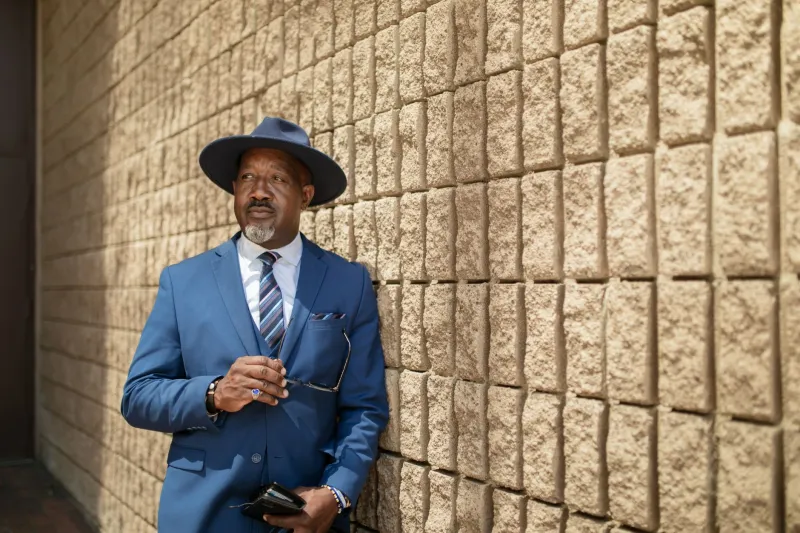
There's a guy in every office, every creative studio, every boardroom — he walks in wearing basically the same thing he wore last Tuesday, and somehow he commands more attention than anyone else in the room. No loud prints. No statement piece. No obvious effort. Just a clean, considered look that says I already handled this before the meeting even started.
That's not minimalism as a lifestyle trend. That's strategy.
Decision Fatigue Is Real, and Your Wardrobe Is Making It Worse
Here's the neuroscience part, and it's worth sitting with for a second. Your brain runs on a finite tank of high-quality decision-making fuel every single day. Every choice you make — from what to eat for breakfast to whether to reply to that email — draws from the same reservoir. By the time you've burned through thirty micro-decisions before 8 AM, you're already operating at a deficit.
Getting dressed, for most people, is a surprisingly expensive cognitive transaction. You're weighing options, second-guessing combinations, factoring in the day ahead, and making judgment calls about how you want to be perceived. Multiply that across a week and you're losing hours of sharp mental bandwidth to your closet.
High performers figured this out — some intuitively, some deliberately. When you remove the daily negotiation with your wardrobe, you reclaim that energy for the things that actually move the needle. It's not that they don't care about how they look. It's that they've already made that decision. Permanently.
The Uniform Isn't Laziness — It's a Power Move
Let's be clear about what we're talking about here. A personal uniform isn't a capsule wardrobe Pinterest board. It's not about owning thirty identical gray t-shirts to seem interesting at dinner parties. It's about identifying the specific visual language that represents you at your best — and then committing to it so completely that it stops being a daily conversation.
Think about what that actually communicates in practice. When someone always shows up put-together in a consistent, recognizable way, they start to feel inevitable. There's a quiet confidence that radiates from a person who isn't performing their identity through clothing — they're simply expressing it. The look becomes part of the brand. And the brand becomes shorthand for competence, reliability, and presence.
This is fundamentally different from someone who's just not paying attention to how they dress. The uniform effect only works when the uniform itself is intentional. The fit has to be right. The quality has to hold up. The palette has to be cohesive. You're not opting out of style — you're locking it in.
What It Actually Looks Like in Practice
Across industries, the pattern shows up in different forms but the logic is identical.
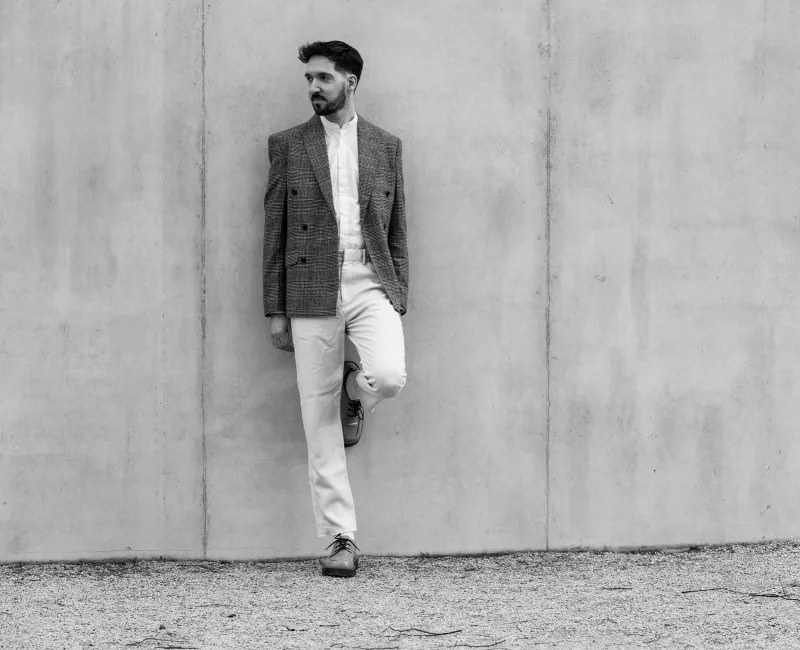
In tech and startup culture, it's the founder in a well-fitted crewneck and dark trousers who never looks underdressed but also never looks like he's trying to impress anyone. In creative fields — architecture, design, publishing — it tends toward a sharper, more European-influenced simplicity. Tailored separates in a tight color range. The same quality sneaker or leather shoe depending on the day. In finance and corporate law, it's the person who's figured out their exact suit configuration and doesn't deviate from it, ever.
What they all share is this: they look like themselves. Every single day. That consistency is its own form of authority.
The Psychological Armor Nobody Talks About
Here's the part that goes deeper than productivity hacks. A personal uniform functions as psychological armor in social and professional environments.
When you're not thinking about your clothes, you stop thinking about how you're being perceived through your clothes. That mental space — the background hum of do I look right for this? — goes quiet. And when that noise disappears, something else takes its place: actual presence. You show up in the room instead of showing up and managing your appearance anxiety at the same time.
This matters more than people acknowledge. A significant portion of social self-consciousness is rooted in uncertainty about appearance. Remove the uncertainty, and you remove a layer of friction between you and full engagement. You're not performing confidence — you're just not undermining it.
How to Build Yours Without Starting from Scratch
The good news is you probably already know what your uniform wants to be. Think about the outfits you've worn where you felt the most like yourself — not the most dressed-up, not the most on-trend, but the most you. Those are your data points.
Start there. Identify the silhouette, the color range, the level of formality that consistently works. Then edit ruthlessly toward that center. What you're building isn't a collection — it's a system. Every piece should earn its place by working with everything else and holding up over time.
Invest in quality where it shows. Fit is non-negotiable — a $40 shirt that fits perfectly will always outperform a $200 shirt that doesn't. And once you've landed on your formula, stop reopening the debate every season. That's the whole point.
The Effortless Look Takes Work Once
The irony of the uniform effect is that it requires real effort to set up — and then almost none to maintain. You're doing the hard thinking upfront so you never have to do it again at 7 AM on a Tuesday when you have three back-to-back calls and a deadline breathing down your neck.
People who look like they're not trying usually tried harder than anyone — they just did it earlier, and smarter. They defined their look, built toward it deliberately, and then let it run on autopilot while they focused on everything else.
That's not disengagement from style. That's mastery of it.
The goal was never to look like you spent an hour getting dressed. The goal was always to look exactly like yourself — and then get on with the work.