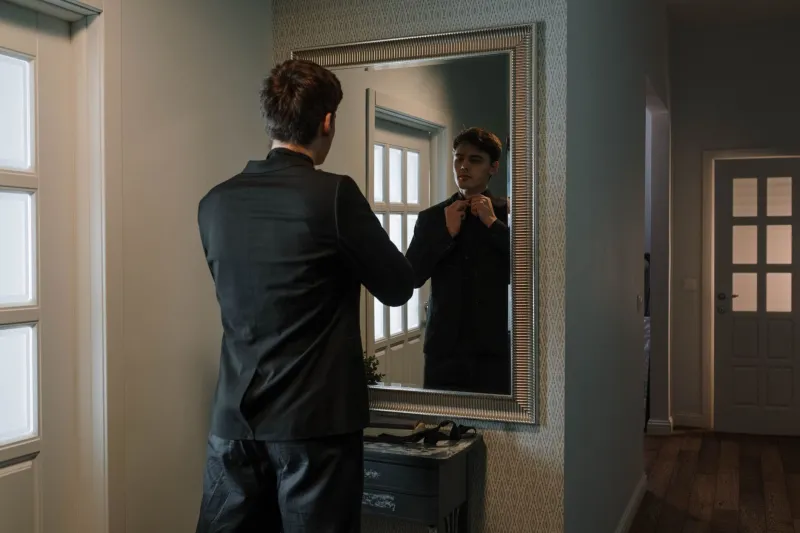
Same Foundation, Infinite Looks: The Art of Wearing Less and Saying More
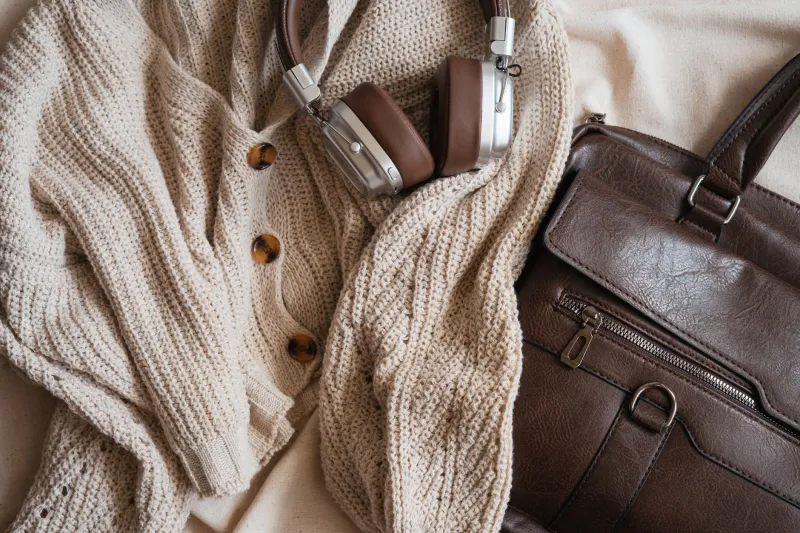
There's a certain kind of person you've probably noticed. Maybe it's someone at work, maybe it's a guy you follow without really knowing why. He doesn't look like he's trying hard. But he always looks right. You can't quite put your finger on what he's wearing, only that it works — every single time.
Here's the thing: he's probably wearing some version of the same outfit he wore last Tuesday. And the Tuesday before that.
That's not laziness. That's mastery.
Why Repetition Is Actually a Style Superpower
We've been sold the idea that variety equals style. That a full closet means a rich wardrobe. But there's a quiet truth that seasoned dressers understand: the fewer variables you're managing, the more intentional every choice becomes.
When you strip your wardrobe down to a tight set of pieces you genuinely trust, something interesting happens. You stop thinking about what to wear and start thinking about how to wear it. The mental energy shifts from inventory management to actual expression.
Psychologists call this kind of deliberate pattern repetition "decision minimization" — and it doesn't make you boring. It makes you precise. The outfit becomes a framework, and the details become your voice.
The Foundation: What "Base Pieces" Actually Means
A foundation piece isn't just a neutral. It's a garment that holds its shape across contexts — something that doesn't demand to be the center of attention but still commands respect when it is.
Think: a well-fitted white Oxford. A heavyweight navy crewneck. A pair of slim dark trousers with a clean break at the ankle. A structured chore coat in a muted earth tone.
None of these pieces are loud. All of them are load-bearing.
The mistake most guys make is treating foundation pieces like filler — stuff you wear when you don't have anything better. Flip that. Treat them like the bones of every good outfit. Everything else is just how you put the flesh on.
How Context Does the Heavy Lifting
Here's a real example. Same outfit: white tee, dark slim jeans, white leather sneakers.
- Worn alone, tucked slightly, with a clean watch? That's a sharp Saturday afternoon in the city.
- Add a relaxed overshirt in olive left unbuttoned? Now you're at a backyard cookout in a way that still looks considered.
- Swap the sneakers for a low-profile leather boot and throw on a structured blazer? You just walked into a casual Friday meeting looking like you own the room.
The base didn't change. The context dressed it. That's the whole game.
The same principle applies with a simple black turtleneck. It's a coffee run. It's a gallery opening. It's a first date. What changes is the layer on top, the shoe on the bottom, and — maybe more importantly — the way you carry yourself in it.
Accessories: The Volume Knob on Any Outfit
If foundation pieces are the bones, accessories are the tone. And they do more work per square inch than almost anything else in your wardrobe.
A clean stainless watch reads differently than a worn leather-strap field watch — even over the same navy crewneck. A canvas tote gives a different signal than a slim leather backpack. A simple chain necklace, barely visible at the collar, shifts the whole register of a plain white tee.
None of this is complicated. But it's intentional. And intentionality is what separates a guy who looks like he got dressed from a guy who looks like he meant something.
Keep your accessory rotation tight. A few watches. Two or three bags that actually serve your life. Some jewelry that feels like you, not like a trend you bought into. When everything you reach for is something you genuinely like, the combinations take care of themselves.
Layering as Visual Interest — Without the Chaos
Layering is the most underused tool in the average American guy's wardrobe. Not because it's difficult, but because it gets taught wrong. It's not about wearing more stuff. It's about creating depth.
Think about it in terms of planes. You've got a base layer close to the body, a mid-layer that adds texture or structure, and an outer layer that frames the whole thing. When those three planes are working together — in terms of proportion, weight, and color — the result looks effortless even if it took you thirty seconds to put on.
The key is keeping the palette tight. Two neutrals and one point of contrast, max. A heathered grey tee under a washed denim jacket with black trousers. A cream henley under a camel topcoat with olive cargo pants. The colors don't fight. The eye moves through the outfit instead of getting stuck on it.
Mood Is a Variable You're Already Wearing
Here's something nobody talks about enough: the same outfit genuinely looks different depending on how you're feeling when you put it on.
This isn't mystical. It's physical. The way you hold your shoulders, whether you've got the collar popped or laid flat, whether the sleeves are pushed up or down — all of that changes the silhouette. All of that communicates something before you've said a word.
A reliable foundation gives you space to let your mood show through rather than fighting against what you're wearing. When you're not second-guessing the outfit, you're more present in it. And presence reads as confidence, which reads as style.
That's why the guys who always look good aren't necessarily wearing anything special. They're wearing things they trust. And trust shows.
Building Your Foundation: Where to Start
If you want to start working this way, the move isn't to go buy a bunch of basics. The move is to audit what you already have.
Pull out the pieces you've reached for most in the last six months. Not the stuff you bought hoping you'd wear it — the stuff you actually wore. Those are your foundation pieces. Everything else is noise.
From there, think about the gaps. Not in terms of "I don't have enough" but in terms of "what would make these pieces work harder?" Maybe it's one good layer. Maybe it's a better boot. Maybe it's finally getting that one pair of trousers tailored so they actually fit.
The goal isn't a capsule wardrobe in the Instagram sense. It's a working wardrobe — one that shows up for you the way you show up for the day.
The Real Flex Is Looking Like Yourself
Anybody can look different every day. Buy enough stuff and you'll never repeat an outfit. But that's not style — that's inventory.
The real flex is looking consistently, unmistakably like yourself — across contexts, across seasons, across moods. That's what a tight foundation built on genuine personal taste actually delivers.
Same pieces. Different day. Different story. That's not a limitation. That's a language.