When Your Clothes Stop Fitting Who You've Become

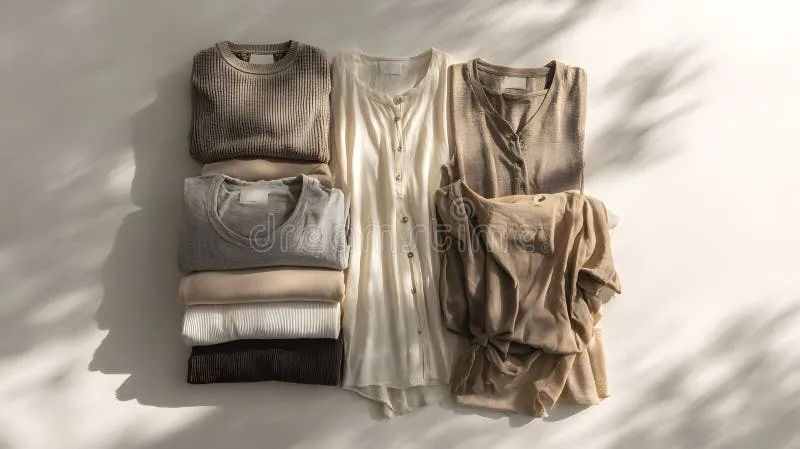
Photo: Shixart1985, CC BY 2.0, via Wikimedia Commons
There's a particular kind of uncomfortable that has nothing to do with a tight waistband. It's the feeling you get when you're standing in front of a full closet, nothing feels right, and you can't quite put your finger on why. Everything technically fits. The colors are fine. But something is off — like wearing a costume to your own life.
That feeling isn't random. It's information.
Your wardrobe has a way of lagging behind the person you're actively becoming. Life moves fast — career pivots, relationship changes, shifts in what you actually believe and value — and your clothes don't always keep up. What you're left with is a closet that reflects an older version of you. Maybe a version you've outgrown entirely.
This is what we'd call a wardrobe identity gap. And the first step to closing it is learning how to spot it.
The Closet That Tells the Wrong Story
Think about the last time you got dressed for something that actually mattered to you — a dinner with someone you respect, a meeting where you wanted to show up with confidence, a Saturday where you just wanted to feel like yourself. Did the clothes cooperate?
If you found yourself defaulting to the same two or three pieces while a dozen others collected dust, that's not a coincidence. Those go-to pieces are doing the heavy lifting because they're the ones that still make sense. The rest? They belong to a different chapter.
Some common signs your wardrobe has stopped keeping up with you:
- You own clothes for a job you no longer have, or a social life you've moved on from
- You keep things because they were expensive, not because you actually wear them
- Getting dressed feels like a chore rather than a choice
- You feel more like yourself in casual settings than in your "dressed up" clothes
- You describe your style in terms of what you used to wear
Any of those land? Good. That's awareness. Now let's do something with it.
The Authenticity Audit, Step by Step
This isn't about decluttering. It's not a Marie Kondo situation where you're asking whether something sparks joy. This is about alignment — specifically, whether what's in your closet reflects who you actually are right now.
Step one: Pull everything out.
Yes, everything. Lay it out or hang it somewhere visible. The goal is to see the full picture at once rather than making decisions in the dark corners of a cramped closet. Distance gives you perspective.
Step two: Sort by feel, not function.
Go through each piece and ask yourself one honest question: When I wear this, do I feel more like myself or less? Not "is it practical" or "did it cost a lot" — just that one question. Create two piles. The ones that make you feel like you, and the ones that don't.
Step three: Interrogate the "doesn't" pile.
For each piece that landed in the wrong pile, dig a little. Ask:
- Who did I buy this for? (A job interview? An ex? A version of yourself you were trying to become?)
- What was I trying to communicate when I wore this?
- Does that communication still apply?
You'll start to notice patterns. Maybe a whole category of your wardrobe — say, overly formal pieces — reflects a professional persona you've evolved out of. Maybe there's a color palette that belongs to a relationship you're no longer in. This stuff is worth noticing.
Step four: Map the gap.
Now look at what's left in your "feels like me" pile. What's missing? What situations in your current life — your actual, present-day life — don't have adequate wardrobe representation? That gap is where your next intentional purchases live.
Life Changes That Create Wardrobe Identity Crises
It helps to know the usual suspects. Certain life transitions are especially good at creating a split between who you are and what you're wearing.
Career shifts are a big one. If you moved from a corporate environment to something more creative, or vice versa, your wardrobe might still be dressed for the old job. The suits that used to feel like armor might now feel like a disguise.
Relocation does it too. Moving from the Northeast to the Southwest, or from a city to the suburbs, changes the visual language around you. What read as sharp and put-together in one context can feel stiff and out of place in another.
Relationship changes — breakups, marriages, divorces — have a surprising amount of influence on how we dress. We absorb the aesthetic preferences of the people we're close to, sometimes without realizing it. When those relationships shift, it's worth asking which parts of your wardrobe were really about them.
Personal evolution is the quieter one. As your values, interests, and sense of self change over time, your style either adapts or falls behind. The version of you that cared a lot about signaling status through logos or trends might not be who you are anymore. That's okay. Your closet just needs to catch up.
Dressing Forward, Not Backward
Once you've identified the gap, the instinct is to fill it immediately — to go shopping and solve the problem with new stuff. Resist that.
The more useful move is to sit with what you've learned. You now know what pieces feel authentic, what life you're actually living, and what version of yourself you're trying to dress. That's a foundation. Build from it deliberately.
Start by getting more use out of the pieces that already feel right. Understand why they work — the fit, the color, the weight of the fabric, the way they read in the room. Then use that as your filter when you do add something new.
At John Steele, the whole point is refined style that actually belongs to you — not a curated version of someone else's aesthetic, not a trend you talked yourself into. Unapologetic individuality means knowing who you are well enough to dress accordingly. That's not arrogance. It's clarity.
And clarity, it turns out, makes getting dressed a whole lot easier.
The Bottom Line
Your wardrobe is always telling a story. The question is whether it's still your story.
If something feels off when you get dressed, trust that feeling. It's usually pointing at a real gap between who you've become and what's hanging in your closet. The authenticity audit isn't about owning less or spending more — it's about making sure the two things are actually in sync.
Because when they are? Getting dressed stops feeling like a negotiation and starts feeling like a statement.
And that's exactly where you want to be.