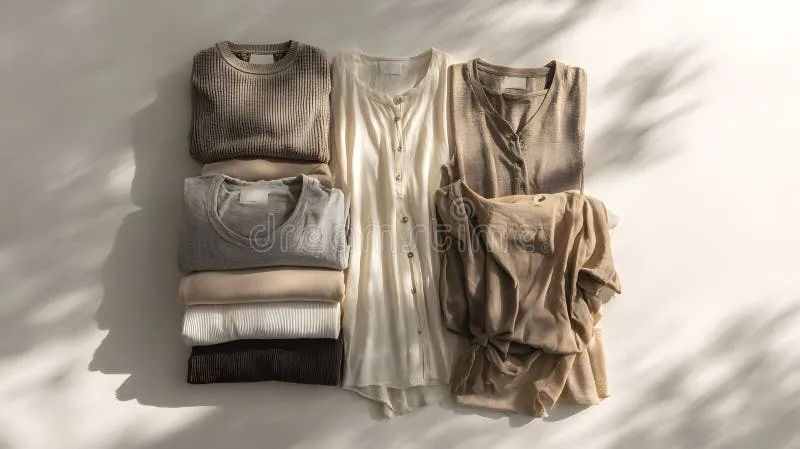
Dressing True Costs More Up Front — and Saves You Everything in the End

Photo: Shixart1985, CC BY 2.0, via Wikimedia Commons
There's a particular kind of buyer's remorse that doesn't hit you at the register. It shows up three weeks later, when you're staring at a shirt you've worn exactly once, still half-convinced you'll find an occasion for it. You bought it because it was everywhere. Because it was marked down. Because, in the moment, it felt like the right call.
It wasn't.
This is the hidden tax on inauthenticity — the financial and psychological toll of dressing for a version of yourself that doesn't quite exist. And most people are paying it every single season without realizing it.
The Real Math Behind Your Wardrobe
Let's talk numbers for a second. The average American spends somewhere between $1,700 and $2,000 a year on clothing. That sounds manageable until you start asking how much of that actually gets worn. Studies on wardrobe utilization consistently show that most people regularly wear only about 20% of what they own. Do that math and you're effectively spending $1,400 a year on clothes that hang there, unworn, quietly judging you.
Fast fashion built its empire on the illusion of affordability. A $25 trend piece feels like a win. But if you buy ten of those a season — and a lot of people do — you've spent $250 on stuff you'll cycle out in six months. Compare that to a single $180 piece that genuinely fits your aesthetic, gets worn twice a week, and holds up for three years. The cost-per-wear on the latter is almost embarrassingly low.
Authenticity isn't a luxury. It's a long-term investment strategy.
What It Actually Means to Dress Like Yourself
Here's where it gets a little more complicated, because "dressing like yourself" sounds simple until you realize most people have never taken the time to figure out what that actually looks like. We default to what's on the rack, what's trending on social, what our coworkers are wearing. We outsource our identity to the algorithm.
Dressing authentically starts with clarity — a clear-eyed understanding of your actual lifestyle, your honest aesthetic preferences, and the specific contexts you dress for. Not the life you're aspirationally building, not the one you had five years ago. The one you're living right now.
When you have that clarity, shopping changes completely. You stop browsing and start editing. You walk past 90% of what's out there because you already know it isn't for you. That selective eye? That's not being picky. That's being efficient.
Two Wardrobes, Two Outcomes
Consider two real-world approaches — not hypothetical archetypes, but patterns that show up constantly in how people actually shop.
The trend-follower hits the sales every season, picks up whatever's getting the most attention, and ends up with a closet that looks different every six months but never quite feels cohesive. There's always something missing, always a gap to fill, always a reason to buy more. The wardrobe is technically full and functionally incomplete.
The style-focused buyer takes longer to make purchases, spends more per item, but buys far less frequently. Their closet is smaller and gets worn more completely. They're not immune to wanting new things — but they've developed a filter. Before anything gets bought, it has to answer a pretty simple question: Does this actually fit who I am?
The trend-follower spends more over time. The style-focused buyer spends more per transaction but less overall. The difference isn't discipline — it's self-knowledge.
The Psychological Cost Nobody Talks About
Beyond the financial angle, there's a mental overhead that comes with a wardrobe that doesn't reflect you. Decision fatigue is real. When you open your closet and nothing feels right — when you're surrounded by options but still feel like you have nothing to wear — that's not a quantity problem. It's a coherence problem.
A wardrobe built around your actual identity is easier to navigate. You've already done the editing. The choices that remain are all good ones. Getting dressed stops being a negotiation and starts being automatic.
There's also something to be said for the confidence that comes with wearing things you genuinely chose — not things that chose you from a sale rack. Clothing that aligns with your identity doesn't just look better. It performs better. You carry it differently.
The Authenticity Premium Is Real — But So Is the Return
Yes, pieces that genuinely fit your style often cost more. A well-constructed jacket from a brand that takes craft seriously is going to run you more than a fast fashion knockoff. That's just reality. But the authenticity premium isn't just about quality of materials — it's about the clarity of intention behind the purchase.
When you buy something because it's you, you take care of it differently. You hang it properly, you follow the wash instructions, you actually wear it. The garment gets used the way it was meant to be used, which extends its life considerably.
When you buy something because it was on sale or because everyone else was buying it, you're less invested. It ends up crumpled on a chair, eventually migrates to the back of the closet, and ultimately gets donated or tossed. The money is gone. The environmental cost is real. And you're no closer to a wardrobe that actually works.
Building the Edit
So how do you start? Not by throwing everything out — that's dramatic and wasteful. Start by paying attention to what you actually reach for. Which pieces do you wear without thinking? Which ones require justification every time you consider them? The ones that need a reason to be worn probably don't belong in your rotation.
From there, get specific about your aesthetic. Not vague — specific. Not "classic" but "structured, dark-toned, minimal hardware." Not "casual" but "relaxed fit, quality fabric, nothing with a logo." The more precisely you can articulate your style, the easier it becomes to shop for it.
Then, when you buy, buy with that filter active. It doesn't mean you'll never experiment or try something new. It means you've raised the bar for what earns a place in your wardrobe.
The Bottom Line
The authenticity tax is what you pay when you dress for trends instead of yourself — in dollars spent on things you don't wear, in mental energy spent on a closet that doesn't function, in the slow erosion of confidence that comes from never quite looking like you.
The alternative costs more per piece and less overall. It takes more self-awareness and less shopping. It produces a wardrobe that's smaller, more intentional, and infinitely more useful.
Refined style isn't about spending more. It's about spending smarter — on the things that are actually worth it. On the pieces that are actually you.